June 2, 2021
/
Aparna Bhattacharyya 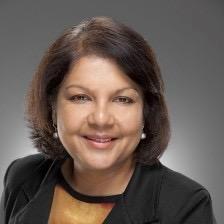
Sonjui Kumar
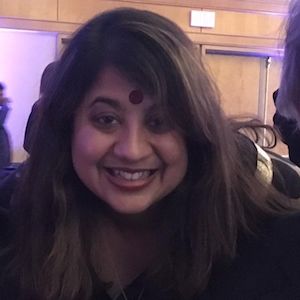
Written by Sonjui Kumar, Board Chair of Asian Americans Advancing Justice Atlanta and founding attorney of Kumar, Prabhu, Patel and Banerje, LLC and Aparna Bhattacharyya, executive director of Raksha, Inc.
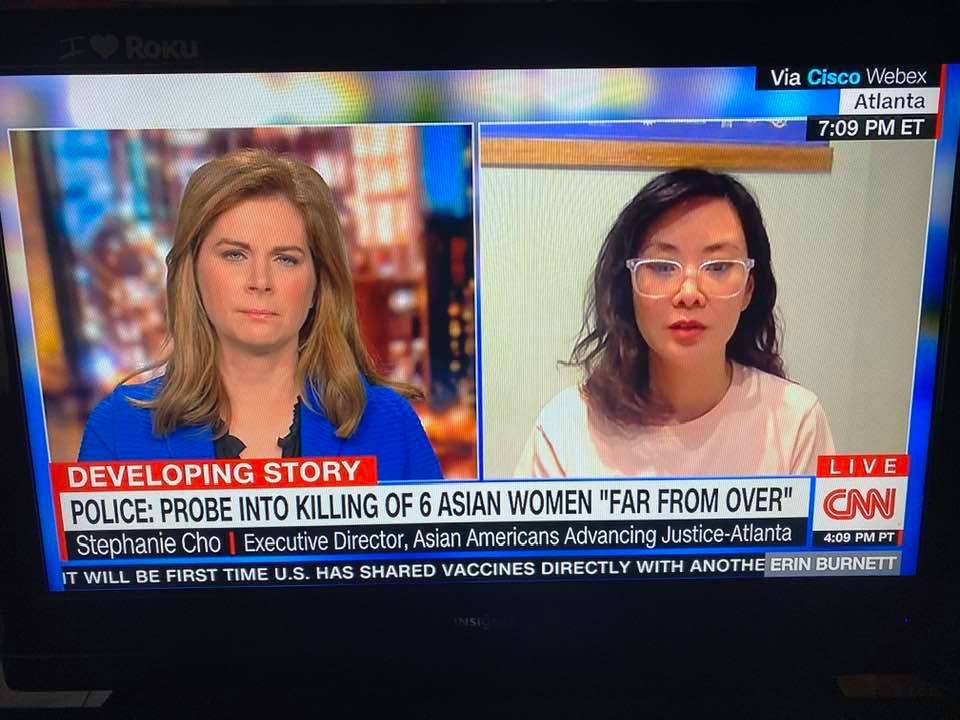
At 8 a.m. the morning after the Atlanta Spa shootings on March 16, the Asian American community of metro Atlanta came together on a hastily organized Zoom call. Over 60 people joined the call. There were a few men, but primarily it was the Asian women of the community who came forward bringing their skills, their experience, their resources and their connections to help the mostly Asian female victims of the tragic killings of the night before. These were the Asian Americans and Pacific Islander (AAPI) women you often see in the forefront of our community, but so many that you do not: the therapists, the interpreters, the advocates, and the nonprofit leaders, all focused on helping the victims of the shootings, their husbands, their children, their friends and families. This was our moment, our call to action, and we answered it, and slowly, deliberately, did what had to be done, always keeping our community and their unique needs in mind: families, immigration concerns, language access and privacy. What has struck us in the last few weeks is how we are wired to do this work quietly and purposefully without conflict.
A few years ago, a well-known Atlanta journalist stated at a leadership event focused on power and influence in the city, that there were no Asian American leaders that had made a mark on metro Atlanta. We understood that statement for what it was: false, not intentionally, but ignorantly. There are hundreds of us, working in our communities, helping our own in their times of need, whether they are survivors of violence and crimes, keeping them informed, helping them become citizens, registering them to vote. Our roots in this community are not that deep, half a generation for some, one for others. But still in these short years, we have created a community that is broad, talented and ready to act when needed. Asian American women are leading some of the most critical nonprofits in Atlanta, including Asian Americans Advancing Justice – Atlanta, Center for Pan Asian Community Services, Raksha, Inc, We Love BuHi, Georgia Asylum and Immigration Network, Georgia Muslim Voter Project, Korean American Coalition, and the Asian American Advocacy Fund.
Whether it is political engagement and getting AAPIs to vote, meeting the critical needs of AAPIs impacted by food and housing insecurity or addressing immigrant survivors of violence, AAPI women leaders are behind the scenes fighting for the diverse needs of this city and this state.
We believe without a doubt that the shooter was targeting our community and our people. Whatever the courts find, the fact that he chose these businesses and these workers as the recipients of his hate is not a coincidence. For us, this was the definition of a hate crime.
In this crisis, we learned that there is a community of people nationally that have dealt with mass shootings and probably every other type of disaster that can impact a city. We, through an informal string of referrals, got plugged into the ecosystem of others who had handled funds for survivors of mass shootings. They were kind and generous with their time and information, giving us documents, protocols and guidance as we navigated an area that was completely new to us. It took a few calls for us to figure out what we had to do and how to do it. We are extraordinarily grateful to all the community foundations, victims’ advocates and the residents of El Paso, Dayton, Ventura County, Charleston and Orlando for sharing what they had learned during their moments of crisis.
We also learned that there are organizations and people, professionals, who have made assisting others their mission and purpose. We learned how to use their experience without letting it subsume our own instincts.
The Asian American community in Atlanta did what it’s supposed to do, it came together and supported those who were working on the ground with the families and the survivors. But there was a lot of trial and error that could have been avoided, we did not know who was supposed to take the lead, we just knew that we needed some centralized leadership. There was a lot of work to be done, conversations to be had and processes to be established in a very short period of time. The burden fell on a few people and they rose to the occasion but it could have been shared and could have been more efficient. We urge you to learn more about our communities and our leadership in Atlanta, not just in May, during Asian American and Pacific Islander Heritage Month, but 365 days a year.
Categories
- Arts, Culture and Creative Enterprises12
- Book Club26
- Community110
- COVID-1934
- Donor Stories57
- Events32
- Great Grant Stories65
- Higher Ground169
- Housing and Neighborhoods29
- Impact Investing37
- Income and Wealth19
- Media22
- News161
- Nonprofits33
- Philanthropic Resources181
- Place-focused8
- Power and Leadership9
- Press Releases100
- Publications87
- TogetherATL26
- Uncategorized426