March 24, 2025
/
By Nikonie Brown-McManus, digital content associate
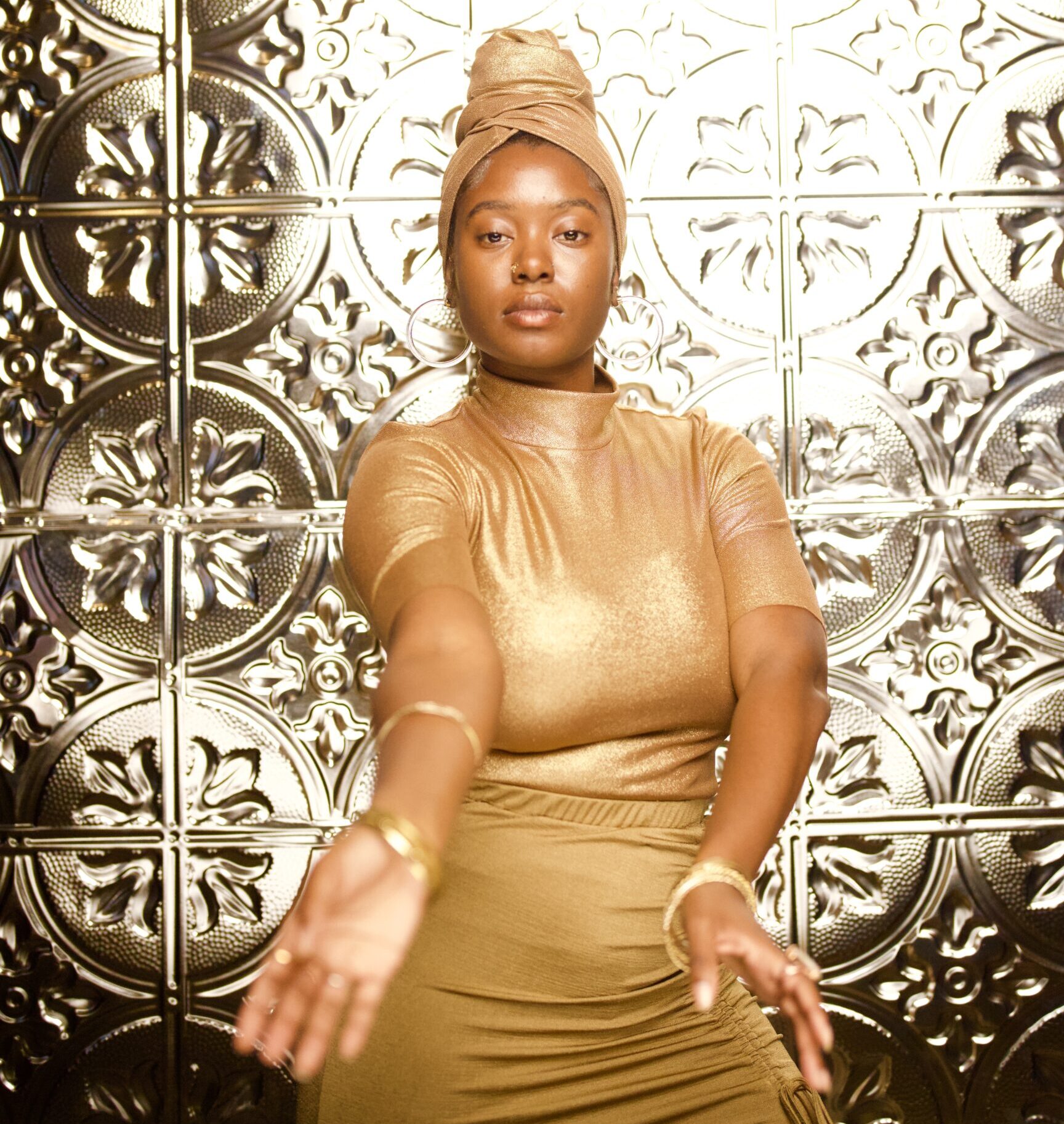
Last year, Umi IMAN visited the Community Foundation to participate in a lunch and learn for National Native American Heritage Month. During the session, staff had the opportunity to dive into the nuances of Native American history and culture, including the powerful Jingle Dress dance. We were inspired by her multifaceted journey and her work as an Emmy-nominated artist, dance educator and advocate for her communities.
This Women’s History Month, we caught up with her to learn more about how her identities shape her work, her connection to dance and the impact she continues to make in uplifting her communities.
How do your identities as a Black American, Caribbean and Native American woman influence the way you navigate the world and the work you do?
I am Umi IMAN, an Emmy-nominated artist, dance educator and Indigenous art curator based in Atlanta, Georgia. I come from a Black American, Caribbean and Tsalagi (Cherokee) Native American lineage. I serve as an archivist of many dances of the African diaspora and as a Fancy/Jingle Dress dancer on the South and Eastern Pow Wow circuit. My artistic practice is centered around healing modalities that foster joy, self-discovery, release and liberation. I am also one half of the dance duo Al Taw’am, among the world’s first acclaimed Muslim hijabi dancers. Through our work as Al Taw’am, we have made a global impact by cultivating storytelling through dance residencies within Black and Indigenous communities worldwide.
Currently, I am expanding my artistic practice as the co-founder and executive director of Sequoia Ascension, a community organization dedicated to the well-being of Atlanta’s Black American and Native American communities through movement and healing.
As a visible artist embodying many intersectional identities — dark-skinned Black, Native, Muslim, woman — I am an integral representation of the global majority. I use my platform to amplify the voices and stories of the communities I represent, with the aim of ensuring not only our survival but also our flourishing.
How has dance been a vehicle for you to express your identity and tell stories that might otherwise go unheard?
I am a practitioner and archivist of Black American Vernacular Dances (BAVD). BAVD is an umbrella term that encompasses the various dances that Black Americans have created from the 1920s to current day on Turtle Island (The U.S). These dances are anchors of stories, expression, culture and spirituality for Black people. Black American Vernacular Dances are tied to specific communities and neighborhoods and often times reflect the unique stories of that community. I am also a Jingle Dress Dancer on the Southeastern powwow circuit.
Utilizing these dances, my work has captured and conveyed ancestral stories, struggles and magic. From police brutality to visibility of Muslim women to reclaiming Native American practices that were once banned to displaying the beautiful essence of Black women, etc. As a Black, Native, Muslim woman, I am a change maker by simply existing. My existence is a testimony of survival and every day I am shifting the narrative of my people/s by sharing my/our stories.
Who are some women—past or present—who inspire you, and why?
I go by the name of Umi IMAN. IMAN (always spelled in all caps) is my birth-given name. Umi, meaning “mother” or a title given to a woman who nurtures, was chosen by me and gives reverence to all the women (mothers, my sisters, aunties, cousins, mentors, friends, etc.) who have nurtured me. I believe I am a compilation of all the great qualities of all the great nurtures that have poured into and have taken care of me. I am the embodiment of their love and excellence, and especially, first and foremost, my mother.
What’s a piece of advice you’d give to young women looking to make an impact in their communities?
Seek guidance, but always remember that the advice people offer is often more about them — their life, experiences, desires and shortcomings — than it is about you. People sometimes project their own limitations onto us, so it’s crucial to recognize that you may hold keys to unlock doors that others cannot. Your purpose may lead you down uncharted paths, and not everyone will fully understand your journey. That’s why it’s vital to surround yourself with those who truly grasp your vision and can help guide you in realizing your purpose. These individuals are essential to your success. As the African proverb wisely states, “If you want to go fast, go alone. If you want to go far, go together.”
Is there anything else you’d like to share?
Sequoia Ascension, a woman-founded organization I co-founded with my sister Khadijah Siferllah, is hosting the inaugural The Atlanta Afroindigenous Peoples Festival on June 14 and 15. This festival, funded in part by the Community Foundation for Greater Atlanta, is a captivating weekend celebration dedicated to uplifting and honoring the rich and diverse cultures of Black, Native and Afroindigenous communities in the South. This festival invites Black, Afroindigenous folks and allies from all communities, shades, enrollment statuses, queer and gender identities, ages and abilities to take part in a variety of intentionally crafted activities, all aimed at creating spaces of belonging, learning, and joy.
Visit Instagram to see Umi IMAN and Sequoia Ascension‘s work in action.
Categories
- Arts, Culture and Creative Enterprises14
- Book Club26
- Community110
- COVID-1934
- Donor Stories57
- Events32
- Great Grant Stories65
- Higher Ground169
- Housing and Neighborhoods30
- Impact Investing38
- Income and Wealth20
- Media22
- News163
- Nonprofits39
- Philanthropic Resources184
- Place-focused8
- Power and Leadership9
- Press Releases100
- Publications87
- TogetherATL27
- Uncategorized426