July 1, 2025
/
By Alexandra Eichenbaum, Deputy Director, Center for Access to Justice and Director, Law Public Interest Programs, Georgia State University College of Law
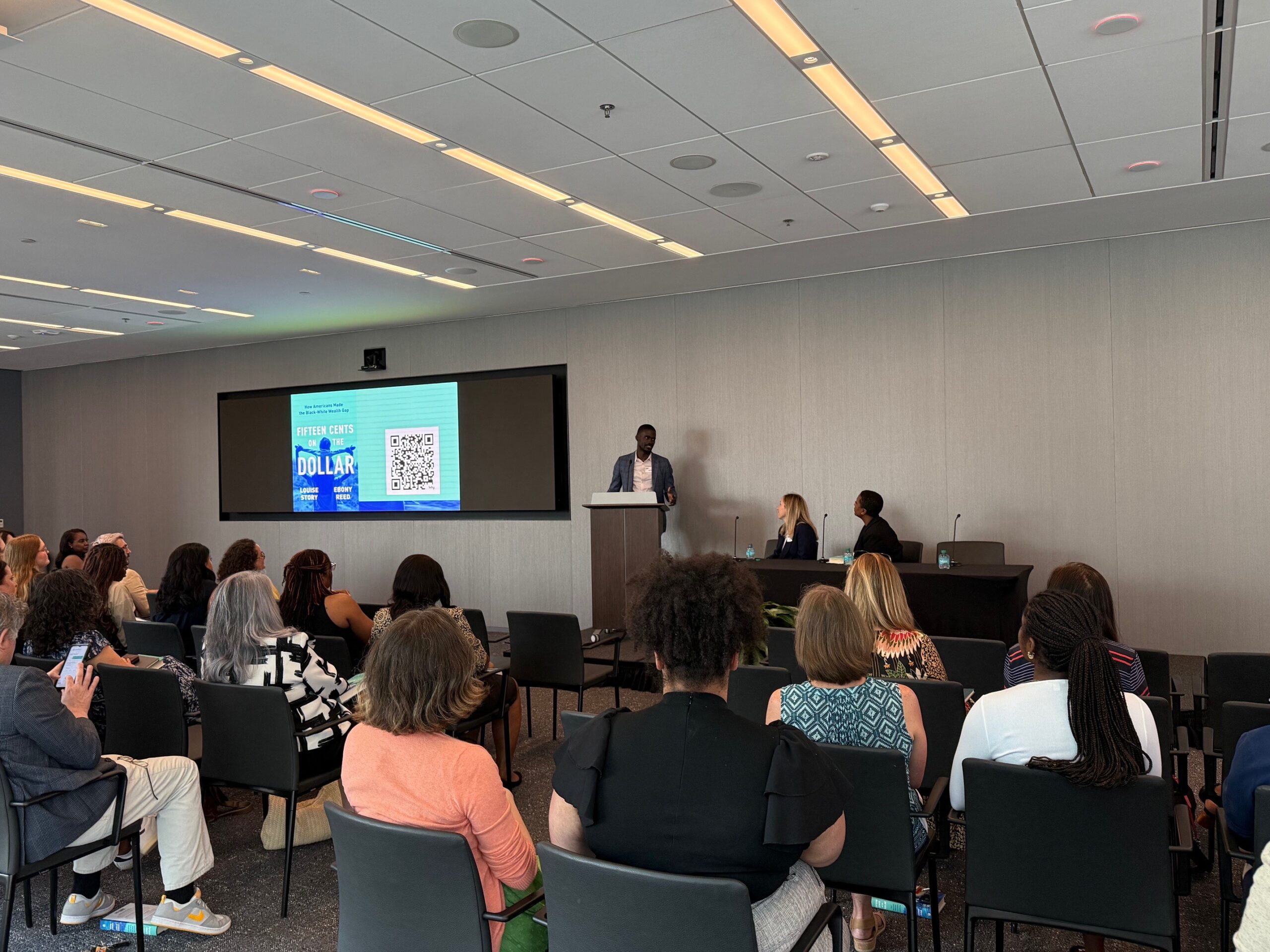
As we close out National Homeownership Month, the Community Foundation for Greater Atlanta co-sponsored an event on June 26 with Ebony Reed and Louise Story, authors of Fifteen Cents on the Dollar: How Americans Made the Black-White Wealth Gap. The book has a particular focus on Atlanta and highlights the many ways in which the wealth gap affects communities.
The event brought together lawyers and advocates to discuss the issues raised by the book, particularly housing and generational wealth. The authors spent years studying economic data to find that as of 2022, for every dollar held by the average white family, the average Black family had 15.5 cents. This is true when looking at both the median and mean wealth gap, demonstrating that the gap exists equally for both the wealthiest and poorest Americans.
The authors are often asked about how long it would take to close this 84.5 cent gap. “Following the current trend, it would take 291 years to close the Black-white wealth gap,” Louise told the audience.
One way to work towards closing the gap is to encourage policies that support and promote increased homeownership among underrepresented groups, including Black communities. The book highlights the legacy of redlining—the historic practice used by the government and banks to effectively exclude minority and low-income communities from accessing opportunities for homeownership and investment. Though redlining is illegal today, its legacy has scarred cities like Atlanta where there are still many barriers to homeownership. One of those barriers is heirs’ property.
What is heirs’ property?
Heirs’ property is property that has been passed down to multiple family members by inheritance, typically when an individual dies without a will. When heirs’ property is created, no one individual has clear title to the property—sometimes called “tangled title.” Owning property without a clear title leads to many economic challenges and it can be difficult to hold onto the home. Oftentimes, heirs are unable to access loans and mortgages, cannot apply for grants or home repair funds, and cannot build wealth from the property by renting it out or using the property for commercial purposes. It also leaves the property vulnerable to being acquired by developers and predatory actors.
According to the Georgia Heirs Property Law Center, heirs’ property represents approximately $47 billion in frozen equity for the state of Georgia. With so many Georgians unable to access the equity or protect their interests in heirs’ property, it is important to educate the community and prevent families from losing their homes to legal ownership challenges.
If you are a homeowner with clear title to your property, it is critical to have a will which designates how your property should be transferred. If you are living in a home without clear title, you should discuss with the co-owners whether consolidating ownership in one person makes sense.
As homeownership has historically proven to be one of the most significant methods to sustain and grow generational wealth, the Foundation is working alongside community partners to identify local solutions for heirs’ property, including supporting the remediation of tangled titles for legacy homeowners in our community. With these collective efforts, we can support current Atlanta residents with their goals to remain in stable, affordable housing and get one step closer to closing that wealth gap.
Categories
- Arts, Culture and Creative Enterprises12
- Book Club26
- Community110
- COVID-1934
- Donor Stories54
- Events30
- Great Grant Stories64
- Higher Ground168
- Housing and Neighborhoods28
- Impact Investing34
- Income and Wealth17
- Media22
- News161
- Nonprofits31
- Philanthropic Resources177
- Place-focused7
- Power and Leadership9
- Press Releases100
- Publications87
- TogetherATL26
- Uncategorized426