April 27, 2020
/
 By Angie Allen, Community Foundation donor and Spark Opportunity giving circle member
I live in a bifurcated world.
I’m a white American citizen, with a college education, a house, access to quality healthcare, have investments, and retirement savings, no disabilities, and no worries about my utilities being shut off or being evicted. And everyone in my circle has been largely spared from contracting the COVID-19 (CV), including my relatives in northern Italy, and we are all so thankful. My privilege is now in even sharper focus because our supportive cluster of family, friends and neighbors have brought us nutritious food and groceries, and I don’t have to be in any crowded spaces, or on crowded public transportation, to get to my job.
I’ve lived in this privileged world for a long time. As have a lot of my family and friends.
But now I feel like I am sheltering in a comfortable ivory tower.
This privileged life is split off from the experience of most people in the world. CV has dramatically magnified these distinctions, in a way that keeps me and my conscience up at night, and I’m hearing the same from so many other people.
Everyone paying attention, even to our own email inboxes, can see this divide.
On the one hand, are emails sharing tips on how to stay safe while sheltering in place, or how to not get bored, or what’s good on TV, or good recipes to try, on homeschooling, and on all manner of self-care like meditation and yoga websites, and I have invitations for social visits on Zoom. I’m well set on “self-care.”
On the other hand, are the emails citing all of the devastating, heartbreaking, horrifying news about very vulnerable groups of people with comments like: “This is abominable!” “This is unconscionable!” We find the attitude of clueless celebrity bloggers boasting of their luxurious “staycations,” and other examples of economic elitism, galling.
One way to look at the bifurcation in a nutshell is the annoyance of small inconveniences and adaptations – vs. – being outright scared about survival.
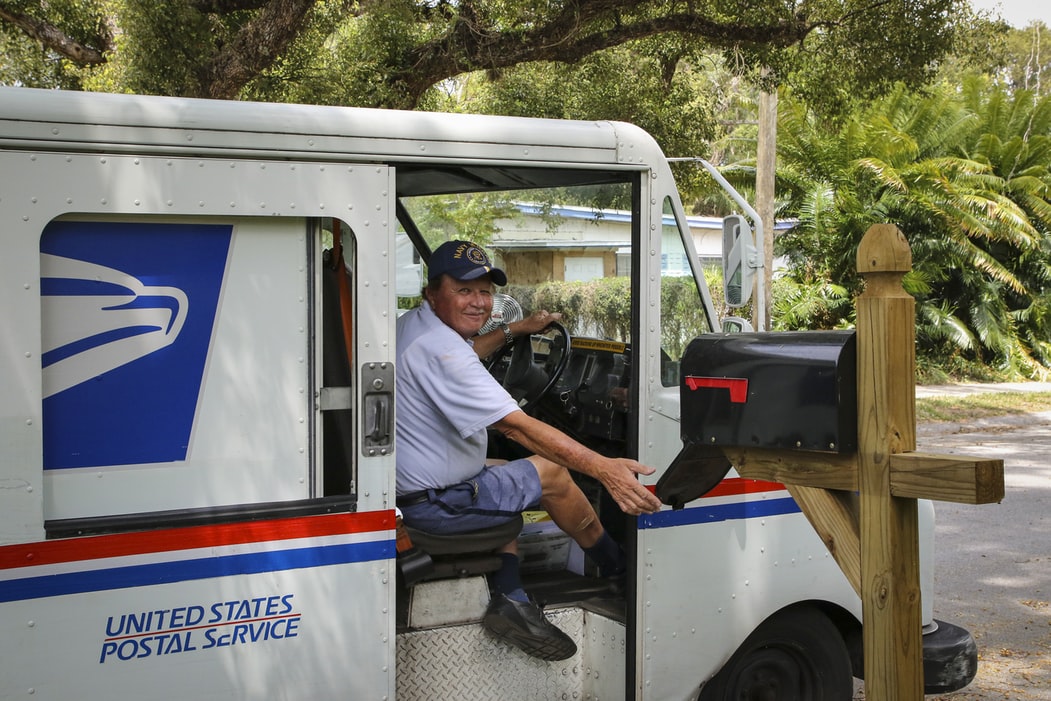
The most vulnerable include all of those brave people who are putting themselves and their families at risk for the benefit of the rest of us. First are healthcare and emergency care workers who are desperately trying to save lives. Very much at risk also are grocery, drugstore and retail employees, warehouse workers, postal workers, delivery people, sanitation workers, workers in cleaning professions, fire and police, public transportation workers, caregivers, housekeepers and childcare providers. We somehow expect people who we deem “essential” to put their lives at risk for us — even those who earn less than a living wage and don’t get benefits, including sick leave. We heard a gut-punching characterization, that “we” are calling “them” essential, because sacrificial would be too honest.
Staying home is a privilege. Social distancing is a privilege. Sixty million Americans are out there on the frontline. Working for us. “They” can’t shelter in place. “They” run a personal risk every day when they step outside of their homes –to take care of “us.” One retail worker described it this way: “how horrifying it is to be in harm’s way while simply trying to make a living, knowing you are playing Russian Roulette with your health and life.” And countless unlucky children were born on the “wrong side of the digital divide” and, every day this continues, are falling behind their classmates who are all set up to learn online.
And we have only recently begun to see how the virus is exposing the stark racial and socio-economic inequities. The Economic Policy Institute reported that “less than one in five black workers and roughly one in six Hispanic workers are able to work from home,” and “only 9.2 percent of workers in the lowest quartile of the wage distribution can telework, compared with 61.5 percent of workers in the highest quartile.”1 Add in pre-existing health and health care disparities, misinformation, and lack of information translated into other languages, and CV is proving shockingly disproportionately deadly.
Many who work in essential jobs that we, who are more privileged and protected, depend on, are undocumented personal service and goods providers, and migrant farm workers. Seventy five percent of agricultural workers in Georgia are undocumented2, and many had already been working for below minimum wages in workplaces that don’t meet OSHA safety standards. At the same time as taking care of us, producing our food, manufacturing our carpets, they live in fear of losing their right to stay here. Now, at this time of greatest need, even presenting a required photo ID to get food from a community pantry poses a risk.
Other people who are most vulnerable include the frail and elderly living alone with compromised immune systems, Native American Nations, people in prison and people who are homeless. Stories about deaths from CV in nursing homes and homes for people with disabilities are, particularly, beyond words to describe.
Yes, Congress passed a large stimulus package. But there are a lot of snafus, the checks won’t come immediately, and, again the most vulnerable, who are also unbanked, face that additional obstacle. And, the stimulus will be nowhere near enough. Twenty two million people have already filed for unemployment benefits3. Undocumented and migrant workers, who have lost crucial household income, don’t qualify for most government assistance, even if one spouse is documented, and even the many who have met the qualifications for legal status that is hung up in red tape. Hopefully, our attitudes toward undocumented workers will collectively, permanently, change because we will, at least, hold onto memories of how “we” depend on “them.” They are the forgotten people.
I’m not writing this for so many of limited financial means, dependent on fixed incomes, who are doing everything they can to help, including sewing masks, delivering food, donating blood, advocating and offering empathy and prayers.
And, I’m not writing this to help shape mindsets of privileged people, like me, toward “enlightened self-interest,” such as boosting the economy and stock market for our benefit, or helping personal service providers get back to helping “us.”
I’m writing this because, for everyone in the position to do so, this is the time to be more charitable, not less. On a large scale. Morally speaking. And because I want to keep asking myself hard questions and coming up with the right, moral answers. And trust that others with the financial wherewithal, as evidenced by the household wealth distribution data, will act morally, for the greater good, at a time when it has never been more critical. Facts and perspective can help as prompts and reminders that indefensible inequality is the other curve that has to be flattened.
Here are some of those questions that get at the heart of where we are.
Do we want our legacy to be how much wealth we had when we died? Do we want our legacy to be how much wealth we left to the next generation? Will we keep in mind that the next generation is already taken care of – that, according to Cerulli Associates, Millennials are anticipated to inherit over $68 trillion from their Baby Boomer parents over the next 25 years4? Do we want future generations to live in a world of increasing inequality – what a friend of mine watching this pandemic calls a cruel and hateful world? Or do we wish to do our full part to rectify these disparities, which will be the greatest and most purposeful legacy we could leave the next generations? Using a Biblical reference, will we unlock those treasure on earth?
Speaking now to fellow investors, we know that stock markets fluctuate. The-long term trend has always pointed upward. As we look at our portfolios, will we see the February 2020 high of the best-known market index, the Dow Jones Industrial Average (DJIA), at nearly 30,000, for what it was? As the unsustainable anomaly? Will we ask ourselves: was I charitable and outward-focused in 2016 when the DJIA was 17,000? In 2017 at DJIA 21,0005? The DJIA is at 24,000 now – can I be less charitable when societal needs have never been greater? Will we “mark our minds and hearts to the market” of the critical needs we know are out there?
And will we give serious – and sustained – thought to our own “wants” vs. “needs?” Will this scaled-back lifestyle we have been living these past weeks yield the benefit of halting the escalating consumerism that has wildly spiraled in recent years? Will we take the unplanned savings from prohibited entertainment and travel and give that to those in great need? Will we keep examining our consciences about “our” future “security” vs. the survival of those who are most vulnerable? Will we personally make distinctions between maintaining, let alone building, our own “cushion” – vs. – the despair countless people now feel over what happens next month – or in 18 months?
Nonprofit organizations are doing everything they can to respond to these needs. Many have set up Emergency COVID-19 Funds. They cannot meet the overwhelming demands. Many are small organizations doing amazing grassroots work with immediate impact in helping address basic needs. Many face the risk of shutting down due to lack of funding. Large organizations like food banks try to deal with never-before-seen lines of people who are hungry – some stretching for miles – in America! Public hospitals and public healthcare providers have been desperate for supplies and equipment and need funds to meet dramatically increased operating expenses. Public education at all levels has to now meet additional demands beyond its scope, including feeding hungry students and housing homeless ones. Beyond providing critical information on CV, public broadcasting needs funds for increased online learning that students in rural areas, in particular, now depend on. Domestic violence organizations need funding for new ways to keep many more victims safe. This list of organizations that need additional funding is endless. And the needs will persist for a long time. No one knows for how long. Or how many follow-on waves there might be.
Our bifurcated world laid bare by this pandemic is not new. Inequality has soared over the past 40-50 years, as vividly shown in these charts.
The novel coronavirus is, however, providing a novel societal opportunity. Those of us who can shelter in place have more time to do much more than simply lament over an isolated or transitory or far away news story, as we might have with horrifying crises in the past. The CV is pervasive yet hits close to home, cuts deep, and the world will be struggling with the aftermath for a long time. We actually have enforced time to think and really search our souls – and to really be purposeful about how we respond. This is a big “dividend” of time to reflect on all we can be doing and giving. “We” will never miss what we have locked up, and it’s everything to “them.”
The truth, of course, is that there is no “we” and “them.” We are all one. We are interdependent. I know for myself that I have never lived through a more important time to remind myself every day that I truly believe that. And to demonstrate it by acting on that belief.
Healing this bifurcated world is not a hopeless notion. Hope springs from examining our awakened hearts, answering the call, correcting these inequities, and stretching to our outermost limits.
Views expressed belong to the author, and do not necessarily reflect the views of the Community Foundation for Greater Atlanta.
1https://www.nytimes.com/2020/04/05/opinion/coronavirus-social-distancing.html
2National Center for Civil and Human Rights Lunch and Learn webinar, April 10, 2020 featuring Monica Khant, Executive Director of the Georgia Asylum & Immigration Network and Gigi Pedraza, Executive Director and Founder of the Latino Community Fund Georgia
3https://www.washingtonpost.com/business/2020/04/16/unemployment-claims-coronavirus/
4https://info.cerulli.com/HNW-Transfer-of-Wealth-Cerulli.html
5Yahoo! Finance DJIA historical data
Categories
- Arts, Culture and Creative Enterprises14
- Book Club26
- Community110
- COVID-1934
- Donor Stories57
- Events32
- Great Grant Stories65
- Higher Ground169
- Housing and Neighborhoods30
- Impact Investing38
- Income and Wealth20
- Media22
- News163
- Nonprofits39
- Philanthropic Resources184
- Place-focused8
- Power and Leadership9
- Press Releases100
- Publications87
- TogetherATL27
- Uncategorized426