
June 17, 2022
/
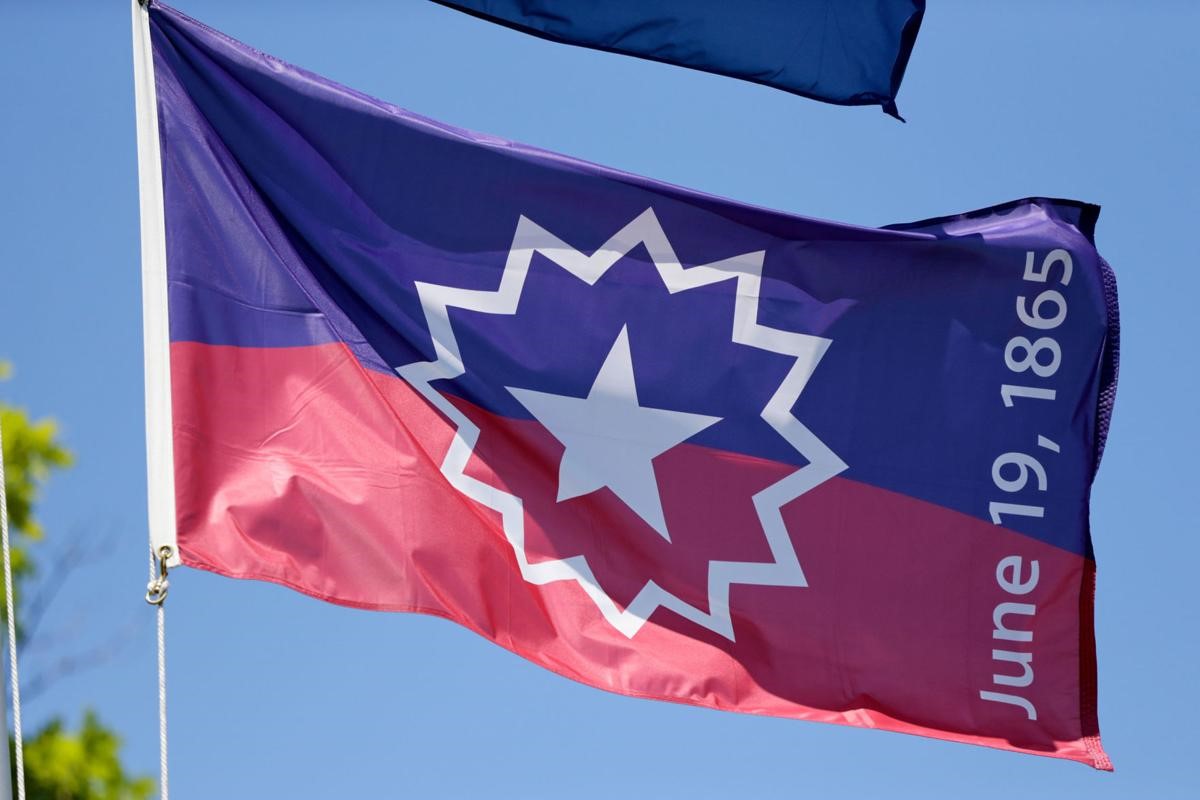
Juneteenth commemorates the June 19, 1865 announcement of the abolition of slavery in Texas. Originating in Galveston, Texas, Juneteenth is celebrated annually on June 19 all over the United States. The day was recognized as a federal holiday in 2021 when President Joe Biden signed the Juneteenth National Independence Day Act into law.
We asked our staff to share their thoughts on Juneteenth or anything they learned about the holiday in recent years.
Nikonie Brown, content and social media associate:
“I grew up in the South and learned a little about Juneteenth, but I learned even more about the holiday and its circumstances when I became an adult. Learning that the news reached Texas over two years later was a shock.
Now I see more people discuss Juneteenth and hold celebrations and I love seeing people come together to celebrate freedom. While there’s still a long way to go when it comes to racial equity and the safety of Black people in general, it’s great to take time out for joy and celebration.”
Alison O’Carroll, director and philanthropic counsel:
“I knew Juneteenth was commemorated when the last enslaved Americans were informed they were free by U.S. Army troops, in Texas, on the basis of the Emancipation Proclamation. However, I didn’t realize the subtler points of the Emancipation Proclamation, which took effect two years before. From NPR’s website:
The troops enforced President Abraham Lincoln’s Emancipation Proclamation, which had taken effect in 1863.
The proclamation declared freedom for some enslaved people. “It freed people who were a part of the Confederacy at the point at which the Emancipation Proclamation took effect,” Kay Wright Lewis, an associate professor of history at Howard University, tells Morning Edition host Noel King. However, it did not apply to people who were enslaved in areas that the Union Army had conquered or in places that had not seceded but where slavery was legal. Instead of the proclamation being a moral decision, Wright Lewis says, Lincoln’s intent was to scare the South into surrendering.
It took the 13th Amendment, ratified December 1865, to formally abolish slavery in all U.S. States and territories. Mississippi was the final state to ratify the 13th amendment, doing so in 1995. The proper paperwork wasn’t filed to make it official at that time; that was done 18 years later, in 2013.”
Nichole Owens, public relations manager:
“Juneteenth brought news of the Emancipation Proclamation from two years prior, but it didn’t abolish slavery; the 13th Amendment to the Constitution did, six months later, on December 31, 1865 — “except as punishment for a crime whereof the party shall have been duly convicted.” This exception set the stage for future iterations of slavery, such as convict leasing and mass incarceration.
What I think, and what I’ve learned, about Juneteenth is that there’s always more to learn. For me, having the freedom to access information and gain knowledge without consequence is worth celebrating.”
Learn more about Juneteenth in our previous blogs here and here.
Categories
- Arts, Culture and Creative Enterprises14
- Book Club26
- Community110
- COVID-1934
- Donor Stories57
- Events32
- Great Grant Stories65
- Higher Ground169
- Housing and Neighborhoods30
- Impact Investing40
- Income and Wealth20
- Media22
- News163
- Nonprofits42
- Philanthropic Resources184
- Place-focused8
- Power and Leadership9
- Press Releases100
- Publications87
- TogetherATL27
- Uncategorized426