
June 16, 2021
/

By Andrea Williams, community assistant
June 19, 1865, proved to be a day that would forever change the lives of an entire nation.
On that day, 2000 saddle-weary Union troops of the 13th Army Corps arrived in Galveston, Texas led by Major General Gordon Granger. They marched through the city stopping at several locations, including their headquarters, to read aloud a crucial message, referred to as General Order, No. 3:
“The people of Texas are informed that, in accordance with a Proclamation from the Executive of the United States, all slaves are free. This involves an absolute equality of personal rights and rights of property between former masters and slaves, and the connection heretofore existing between them, becomes that between employer and hired labor. The Freedmen are advised to remain at their present homes, and work for wages. They are informed that they will not be allowed to collect at military posts; and that they will not be supported in idleness either there or elsewhere.”
General Order, No. 3 informed all Texans that, in accordance with a Proclamation from the Executive of the United States, all slaves were free.
U.S. President Abraham Lincoln announced the Emancipation Proclamation on September 22, 1862. Issued under powers granted to the president “as a fit and necessary war measure,” the proclamation stated, “That on the 1st day of January, A.D. 1863, all persons held as slaves within any State or designated part of a State the people whereof shall then be in rebellion against the United States shall be then, thenceforward and forever free…” However, Lincoln’s proclamation would have little impact on Texans at that time due to the small number of Union troops available to enforce it.
Although it took two and a half years for this news of freedom to reach the most remote region of the Confederacy, for the enslaved people of Texas, the message was nonetheless welcomed and rejoiced! Juneteenth was born.
The day’s name is a combination of “June” and “nineteenth” in honor of the date of Granger’s announcement and first appeared around 1903. In many circles, June 19th is also known as African American Freedom Day, Jubilee Day or Emancipation Day. It is a holiday that is arguably as important to our nation as the Fourth of July. Juneteenth commemorates the true end of slavery, by decree. Juneteenth is the celebration of the emancipation of people who were enslaved in America, and the continued celebration and liberation throughout time. It is revered across our country and we are finding new and joyous ways to celebrate each and every year.
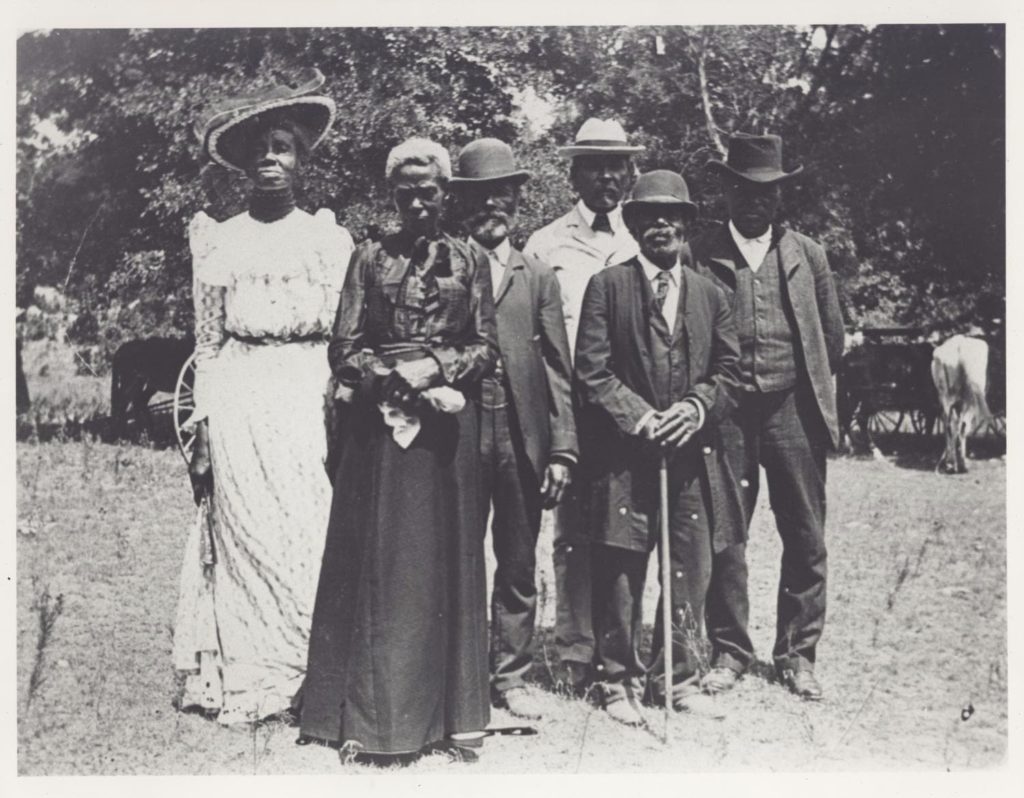
Historic Juneteenth celebrations were marked by religious/prayer services, readings, inspirational speeches, artifacts and stories from formerly enslaved people in African American communities. The celebrations spread nationwide but were observed primarily in local communities.
As we entered the 20th century, celebrations were relegated strictly to the African American communities. The events, however, were more festive and included baseball, contests, dancing, firework displays, parades, rodeo events, singing, skits and, of course, family reunions and feasting.
According to the New York Times, in recent years and particularly following nationwide protests over police brutality and the deaths of Ahmaud Arbery, George Floyd, Breonna Taylor and numerous other Black Americans, there is a renewed interest in the day that celebrates freedom.
We are seeing new, more widespread celebrations, given the sweeping changes and protests across the U.S. over the past several years.
We see dedications of murals in predominantly African American neighborhoods, land dedications and many businesses moved toward marking the day as a company holiday, giving many employees a paid day off.
While many major companies recognized Juneteenth in 2020, so far it is not a national holiday. Only 48 states and the District of Columbia recognize Juneteenth as a state or ceremonial holiday. The only two states that do not recognize the holiday are Hawaii and South Dakota. In 2018, the U.S. Senate passed a resolution designating June 19th as “Juneteenth Independence Day,” but it has not yet reached the House. Activists have been pushing Congress to recognize Juneteenth as a national holiday. On Tuesday, June 15, 2021, the Senate unanimously passed a bill making Juneteenth a federal holiday. The bill is now on its way to the House, where it is expected to pass as well.
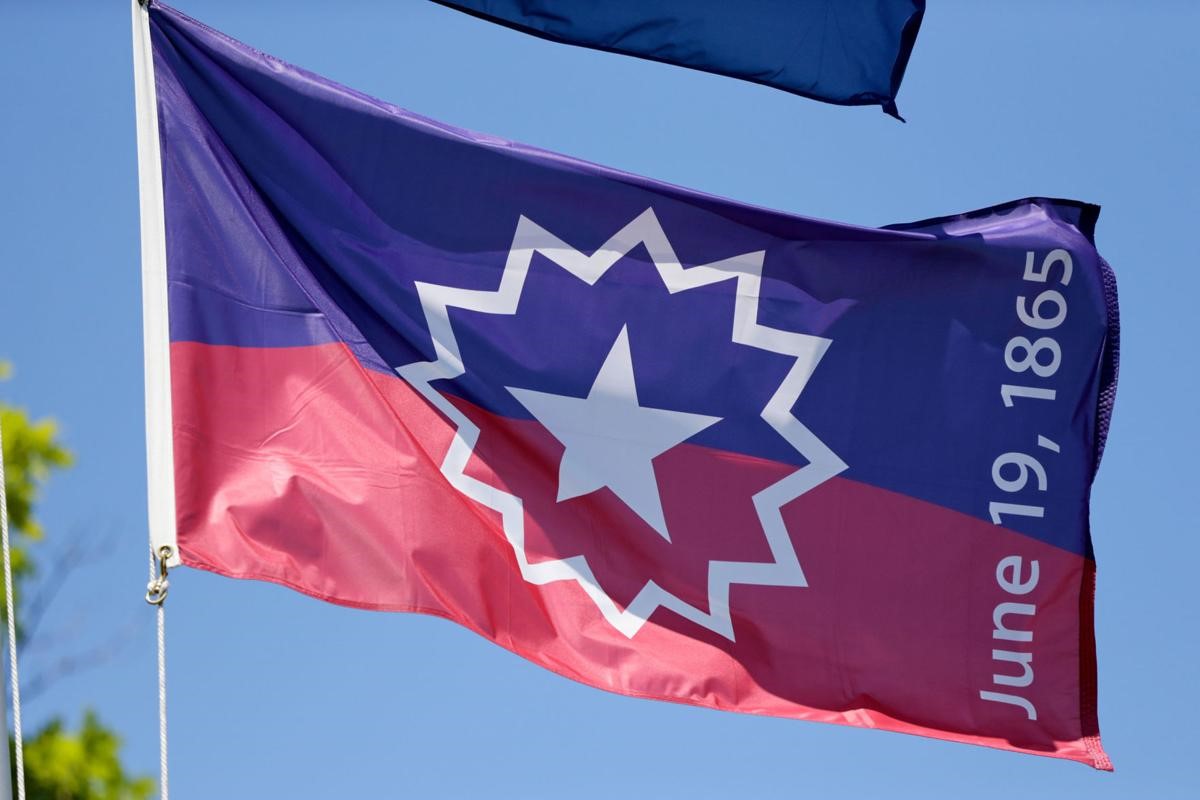
In 1997, the Juneteenth flag was created and flies high at many federal and state buildings alongside the US flag to commemorate this 156-year-old holiday celebrating the emancipation of African-Americans from slavery in the U.S. You can read more about the significance of its design and its creators here.
Juneteenth is a moment of reflection on how far we have come as a nation. It is a restorative moment of pride and a celebration. It focuses on the present condition and it is a hopeful look at freedom and how far we have yet to go.
How will YOU honor Juneteenth?
Main photo credit: Nati Harnik, Associated Press
Categories
- Arts, Culture and Creative Enterprises14
- Book Club26
- Community110
- COVID-1934
- Donor Stories57
- Events32
- Great Grant Stories65
- Higher Ground169
- Housing and Neighborhoods30
- Impact Investing40
- Income and Wealth20
- Media22
- News163
- Nonprofits42
- Philanthropic Resources184
- Place-focused8
- Power and Leadership9
- Press Releases100
- Publications87
- TogetherATL27
- Uncategorized426