January 30, 2024
/
HouseATL seeks to provide affordable, healthy, safe and stable housing for all Atlantans
By Kristin Allin, Chelsea Arkin and Dr. Bambie Hayes-Brown, co-chairs, HouseATL Policy Working Group
Progress is made when people take the initiative to fix broken systems by working together. HouseATL is a coalition of 385 civic leaders from business, finance, foundations, government, grassroots organizations, healthcare, and law committed to addressing the growing housing crisis in the five-county metro Atlanta area. We believe in the power of collaboration to find solutions to this most pressing issue facing the Atlanta region and the nation.
To address the housing crisis is to address failures of our local and state policies by creating new laws and strengthening existing laws that advance housing stability. HouseATL’s members have identified strengthening tenant protections as a key priority this year within HouseATL’s 2023 Recommendations to Advance Affordable Housing in the Atlanta Region.
Georgia is an outlier in failing to provide even basic tenant protections, the only state without what is called a “warrant of habitability” that defines what it means for a home to be fit for habitation.
A warranty of habitability is essential to protecting tenants in Georgia. Currently, existing Georgia laws only require landlords to fix things that break and do not bar landlords from renting out dilapidated properties “as-is” to desperate tenants. A baseline guarantee of habitable premises would close a gaping loophole in current law.
As lawmakers return to the General Assembly this year, HouseATL is continuing to advocate for passage of HB404 (the Safe at Home Act) and working to address ways to make it more meaningful to provide Georgians with legal protections for healthy, safe, stable rental housing.
Most of us have rented at some point in our lives. Providing basic rights for tenants’ protection impacts people of every age and stage of life, from families and children to college students and seniors. The Atlanta Journal-Constitution’s “Dangerous Dwellings” series revealed the extreme conditions in which many of Atlanta’s renters live.
Renters in Georgia live with mold, nonfunctioning toilets, rodents, and holes in their walls and floors without any meaningful recourse against a landlord that fails to repair and no impact on their obligation to pay rent. Georgia has no requirements for landlords to provide many basic health and safety necessities, such as heating or air conditioning, providing hot and cold water, and working sanitation facilities such as shower or toilet.
With over 133,000 evictions in the five-county Atlanta area just last year, evictions have returned to pre-pandemic levels. Seniors are the fastest growing group among the unsheltered homeless population. In fact, nationwide, children under the age of six, and especially Black children, are at the highest risk of eviction.
HB404 provides that rental property must be “fit for human habitation,” caps security deposits at two months’ rent, and provides a three-business day grace period for the tenant to cure the nonpayment of rent before the landlord may file for eviction, a change that would protect many tenants from the harms caused by a public eviction filing. HouseATL is proud to have supported this legislation as it was amended and passed the House in 2023, and is working to ensure passage in 2024. HouseATL seeks to strengthen three main areas in the bill: 1) further defining what “fit for human habitation” means as other states have done, by reference to health and safety codes; 2) defining the remedies available to a tenant for the landlord’s breach of this habitability obligation; and 3) extending the grace period from three business days to seven days and protecting all tenants with lease violations (not just those in arrears on the rent).
HouseATL encourages policy leaders to commit to policies and resources and strengthen legislation to ensure rental housing is safe and healthy and eviction is a last resort.
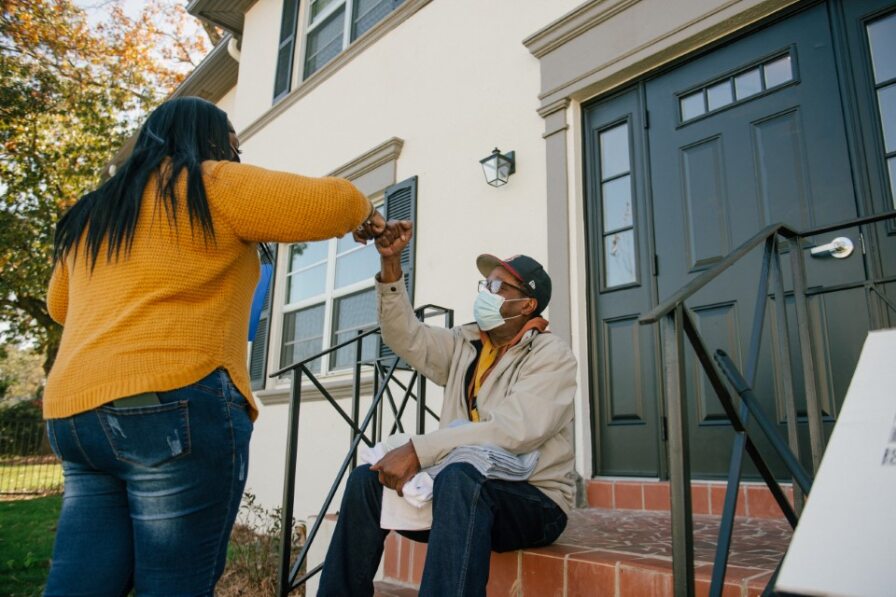
Photo Courtesy: Partners for Home
Note: This piece was originally published in The Saporta Report.
Categories
- Arts, Culture and Creative Enterprises12
- Book Club26
- Community110
- COVID-1934
- Donor Stories57
- Events32
- Great Grant Stories65
- Higher Ground169
- Housing and Neighborhoods29
- Impact Investing36
- Income and Wealth19
- Media22
- News161
- Nonprofits33
- Philanthropic Resources180
- Place-focused8
- Power and Leadership9
- Press Releases100
- Publications87
- TogetherATL26
- Uncategorized426