September 8, 2026
/
In the fall of 2025, thousands of Georgia children were at risk of losing access to the early learning programs their families rely on.
A federal government shutdown had paused key administrative functions in Washington, DC, leaving several Georgia Head Start providers unable to access funds that had already been approved by Congress. With grant cycles scheduled to renew on November 1, there was no one available to sign contracts or release payments.
Without those funds, programs serving more than 6,500 children and employing more than 1,000 staff faced the possibility of shutting down, including three of the largest Head Start providers across metro Atlanta: the YMCA of Metro Atlanta, Sheltering Arms and Easterseals North Georgia.
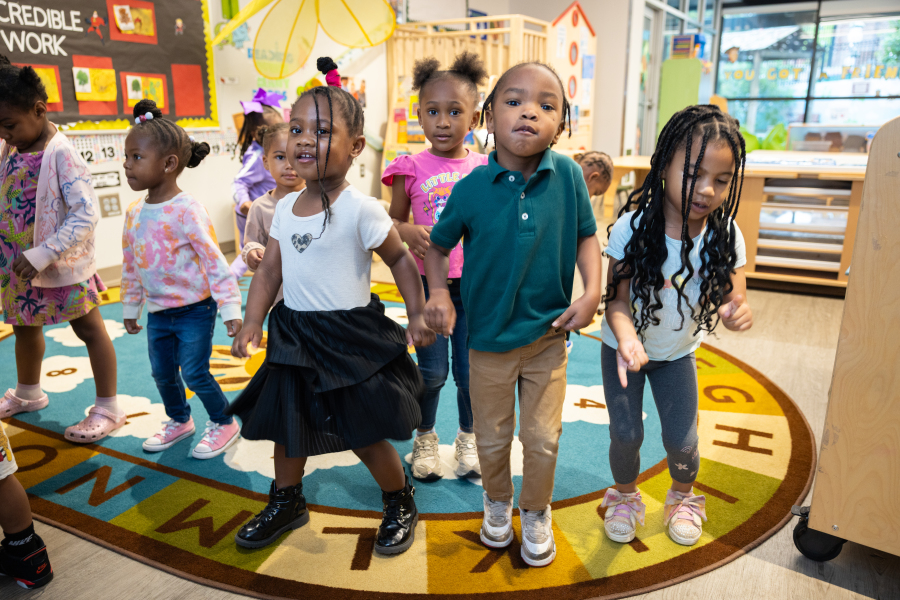
For families living near or below the poverty line, the consequences would have been immediate. Parents could lose reliable childcare and the ability to go to work. Hundreds of teachers and staff members could be furloughed. And thousands of children would lose access to safe, high-quality learning environments that provide meals, education, and family support services.

A Crisis That Required Speed
Head Start providers request federal funds regularly, often every two weeks, to cover operating costs. When the shutdown prevented those payments from being released, nonprofit leaders began preparing for difficult decisions.
For organizations like the YMCA of Metro Atlanta, which is the largest provider of Head Start programs in the state serving more than 2,300 children and 800 staff, the support was critical.
“Head Start isn’t just daycare or pre-K,” said Lauren Koontz, CEO, YMCA of Metro Atlanta. “It’s a full-service program that provides meals, education, and wraparound support services that help families move toward greater stability. Without intervention, those services—and the stability they provide—would have been at risk.”
At Sheltering Arms, one of the state’s largest Head Start providers, nearly 900 children and 200 staff were directly affected.
“With the shutdown, we suddenly faced some very tough decisions,” said Blythe Robinson, president and CEO of Sheltering Arms. “The potential impact on families and educators across our community was enormous.”
Providers quickly aligned messaging and coordinated their response, but solving the financial challenge required a broader solution.
That’s when they turned to the Community Foundation for Greater Atlanta.

Mobilizing Metro Atlanta’s Philanthropic Community
Within hours, the Community Foundation convened philanthropic leaders across metro Atlanta to explore how the community could respond.
Head Start providers estimated they would need approximately $8 million in temporary funding to keep programs operating through the end of the year while federal payments were delayed.
To meet this need, the Community Foundation leveraged its impact investing program to structure a bridge financing solution providing immediate capital to cover operating costs until federal funds could be released.
The Foundation ultimately provided $4.7 million in short-term bridge loans, with flexible terms designed to give providers the stability and breathing room they needed to continue serving families without interruption.
The Community Foundation also mobilized its philanthropic network.
Within 48 hours, 16 foundations across metro Atlanta agreed to provide $7.4 million in unfunded guarantees, pledging to step in and cover the loans if federal funding did not arrive.
“It’s similar to cosigning a lease,” said Sydney Hulebak, director of impact investing at the Community Foundation. “If everything goes as planned, no money moves. But if something goes wrong, the guarantors step in.”
The rapid collaboration allowed providers to remain open during the shutdown.

Keeping Doors Open for Families
The results were immediate and far-reaching.
Across Georgia:
- 6,500 children continued receiving early learning services
- 800 educators remained employed
- Thousands of families were able to maintain childcare and continue working
When the federal government reopened in late November, the delayed funds were released. By January 2026, the bridge loans had been fully repaid.
But for those involved, the true measure of success wasn’t financial.
“The real win is that the doors stayed open,” Hulebak said. “Families’ lives were not disrupted, and children continued receiving the care and education they depend on.”
The model also proved replicable. Using a similar approach, the YMCA of Metro Atlanta took the same idea to the Community Foundation for the CSRA in Augusta, Ga. to help keep its local Head Start programs operating during the shutdown.
“This was a true partnership story,” said Mindy Binderman, who formerly served as executive director of the Georgia Early Education Alliance for Ready Students (GEEARS). “None of this could have happened without relationships.”
For leaders across the sector, the moment demonstrated the unique role a community foundation can play.
“We were able to bring partners together and leverage resources quickly to meet a critical need,” Hulebak said. “That’s what community foundations do best.”
Categories
- Arts, Culture and Creative Enterprises16
- Book Club26
- Community110
- COVID-1935
- Donor Stories58
- Education2
- Events32
- For Greater Atlanta12
- Great Grant Stories65
- Higher Ground170
- Housing and Neighborhoods32
- Impact Investing43
- Income and Wealth21
- Media22
- News164
- Nonprofits48
- Philanthropic Resources190
- Place-focused16
- Power and Leadership10
- Press Releases100
- Publications87
- TogetherATL27
- Uncategorized426